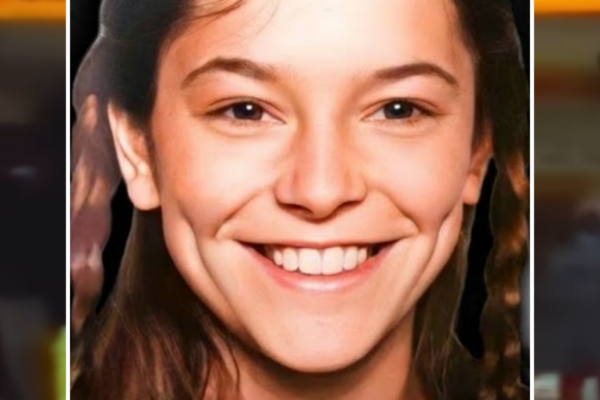
Her Face Sat on Facebook for Years—Then Her Own Grandmother Recognized It: How Facebook Cracked a 38-Year Cold Case Police Called Impossible!!
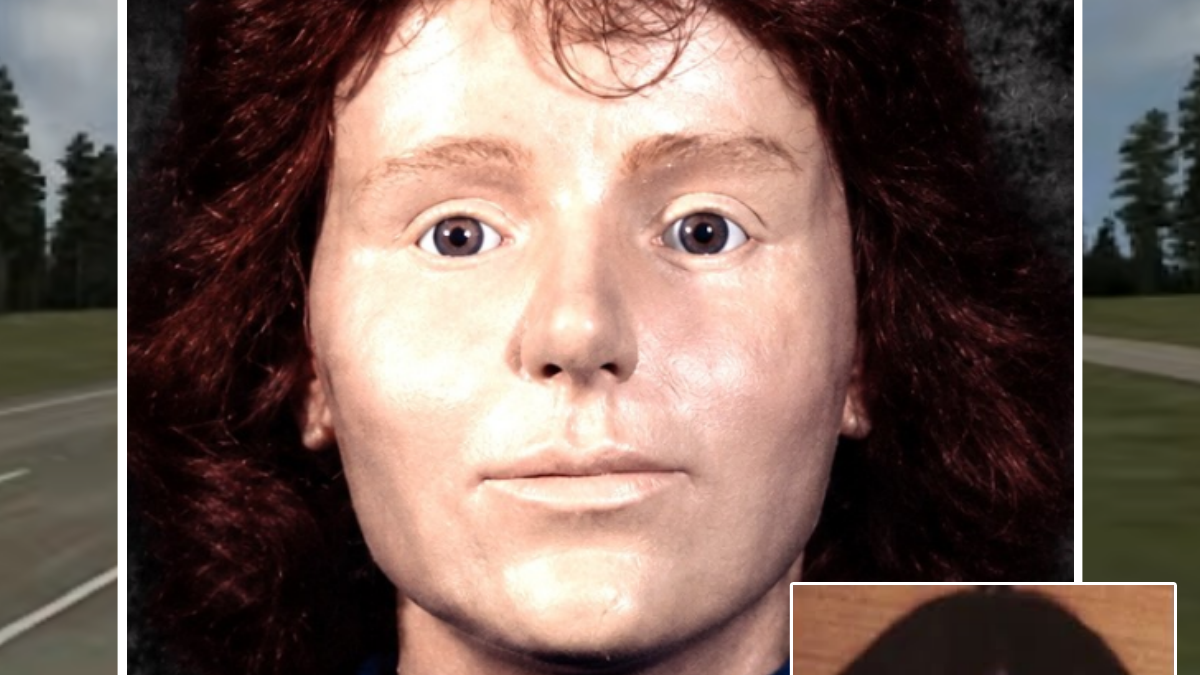
For 38 years, she was just “Jane Doe”—bones in the Louisiana woods, a clay face nobody claimed. Then a Facebook post caught her grandmother’s eye.

On November 5, 1980, the bones of a young woman were found in the woods off Highway 28, west of Alexandria, Louisiana. Nobody could say who she was. The detective who caught the case never stopped thinking about it.
By the time anyone put a name to her, 38 years later, he was no longer a detective. He was the sheriff, and he would call it “the kind of case that you’d never solve.” In the end, it was a Facebook post that gave the woman her name back.
That Wednesday, a man was out rabbit hunting with his beagles in the woods near Gardner, a small community west of Alexandria. The woods sat off Nicholls Cemetery Road, about a quarter mile from the highway. One of his dogs started barking, and he figured it had cornered a rabbit. He walked over to see what it had found. It was a human skull.
The Rapides Parish Sheriff’s Office got the call, and the case went to a detective named William Earl Hilton. Hilton had practically grown up around the job. In 1955, when he was 10, his father was elected constable in Ward 5, and the boy followed him everywhere, watching everything he did. He had wanted to be part of that world ever since.
By the time an investigator and a deputy coroner reached the old cemetery road, it was nearly dark. They had to come back the next morning. Hilton returned with Frank Melder, an investigator from the coroner’s office, and the two searched the ground. There wasn’t much left of her.
What they found was bones, and not all of them, scattered across a wide area. There were no clothes. Lying with her were a pair of wool socks and a clump of hair. Hilton figured the body had been there about two years. The Alexandria Town Talk ran the story that same day under the headline “Skeleton found at Gardner.”
Mixed in with her bones were the bones of a dog. Her listing on the Doe Network, a website that tracks unidentified people, would later note that nobody knew whether the dog had been hers.
Hilton started where any detective would. He went through every missing-person report he could get his hands on, from Rapides Parish and the states around Louisiana, looking for a girl who might have ended up in those woods. None matched.
So the bones went to Baton Rouge, to a team at Louisiana State University that had been assisting police with remains like these since the late 1970s. The group would later become known as the FACES Laboratory.
Its examiners determined she was white and between 16 and 21 years old when she died. They believed she had lain in the woods for at least two months, and possibly a year or more. Later estimates placed her death somewhere between June and November of 1980.
That same Doe Network listing filled in a few more details. She stood between 5 feet and 5-foot-5, with shoulder-length brown hair. She had four fillings, and her wisdom teeth had never come in. The lab also pulled a DNA profile from her remains and kept it on file.
But a DNA profile only helps if there is someone to compare it to, and there was no one. So the lab tried something else. Working from her skull, the team built her a face. Examiners take measurements, such as the width of the nasal opening and the placement of the eye sockets, and use them to sculpt a face in clay.
It is not a photograph, and the people who make these reconstructions say it shouldn’t be studied like one. The idea is that someone who knew her might glance at it and see something familiar, perhaps in the way the eyes sit against the nose or the line of the jaw. The lab made a composite sketch too.
In 2006, Louisiana made the lab its official repository for unidentified and missing persons, with a database anyone could search online. A photo of the clay face went up on the site. Over the years it was copied onto other websites and eventually onto social media. Still, nothing came of it.
The case went cold. Over the decades, several detectives at the sheriff’s office pulled the file and went back through it. None got further than Hilton had. Hilton himself kept climbing. He was elected sheriff of Rapides Parish, served 16 years, took a four-year break, and came back to win two more terms. The girl from the woods off the cemetery road remained a Jane Doe.
In July 2019, the sheriff’s office got a phone call from a woman in Pineville, just across the Red River from Alexandria. She said she had seen the face of the unidentified woman and was fairly sure she knew who it was.
A few weeks earlier, on June 19, a Facebook page called Help ID Me had posted a new entry. It opened with the words “Unidentified in Louisiana” and went on to describe an unidentified white female found on November 5, 1980, in a wooded, rural area.
Help ID Me is run by the National Center for Missing & Exploited Children. When remains are believed to belong to a child, the center helps police try to identify them. Part of that work is posting faces and case details to the page, in the hope that someone scrolling past will recognize them. The face the woman in Pineville saw was the one the FACES lab had built all those years before.
Detectives collected a DNA sample from her. The FACES lab and the Louisiana State Police Crime Lab compared it with the profile that had been sitting on file all along. It was a match.
The girl in the woods was Donna Gail Brazzle. She was about 18 when she died and had been living around Alexandria and Pineville. The woman who made the call was her grandmother.
Detective Steve Phillips, who was working the case by then, put it simply. They had Donna Gail’s profile on file the whole time. They “just knew her as Jane Doe.” He credited the family for recognizing her face and the FACES lab for pushing the testing through so quickly.
On August 19, 2019, the National Center for Missing & Exploited Children announced the identification on its main Facebook page. “Your attention and efforts helped to give Donna back her name,” the post read. The LSU lab posted its own note that day, thanking the sheriff’s office and the state crime lab and calling this one of the oldest unidentified-person cases it had ever solved.
But the name was not the only thing the sheriff’s office announced. Five days earlier, on August 14, deputies had arrested a 64-year-old Oakdale man named Leo Leard. His bonds on two of the charges alone totaled $1 million.
A second man was charged as well. Gary Joseph Haymon, 54, also of Oakdale, was already in state prison serving 49 years for second-degree kidnapping, first-degree robbery and public bribery. He wasn’t expected to get out until 2047. Both men were charged with first-degree murder and aggravated kidnapping in Donna Gail Brazzle’s death.
That same week, Hilton took a reporter from KALB out to the spot where it all began, nearly 39 years earlier. He pointed into the trees and said that was where they found her. The land had changed completely, he said, and the tall pines standing there now didn’t exist in 1980.
The sheriff’s office would not say what connected the two men to Donna. It said only that the investigation was ongoing and more charges could follow. The timeline also looked odd. Investigators had only learned her name in July, yet by mid-August they had a man in handcuffs and murder charges against two people.
The reason, it turned out, is that the office had known those two names for five years.
In 2014, Haymon was locked up in Cottonport when he reached out to the Rapides Parish Sheriff’s Office. He sent investigators a letter implicating two men in the death of a girl back in 1980. One was Leard. The other was Haymon himself.
He also had a request. He wanted to be transferred to Angola, the Louisiana State Penitentiary, one of the largest maximum-security prisons in the country. Haymon began telling investigators what he said happened in 1980, and before long the transfer went through.
Phillips was the detective handling the information. When the arrests were announced, Hilton explained that the case had sat cold for years until Phillips came up with something on one of the suspects. But no one was charged, and the girl in the woods still had no name. That was how things stood for five years.
Then, in July 2019, Donna’s grandmother picked up the phone. The DNA came back, the sheriff’s office suddenly had a name to attach to the girl in Haymon’s letter, and a judge signed warrants for both men.
In January 2020, Leard hired a defense attorney, George Higgins. The following month, Judge Greg Beard set Leard’s bond on the murder charge at $500,000. Later that month, a Rapides Parish grand jury indicted Leard, and Haymon alongside him. Trial was set for November 15, 2021.
On August 19, 2021, exactly two years after the arrests were announced, Higgins walked into court with two motions. One asked the judge to throw out the indictment. The other asked him to exclude Haymon’s testimony.
Higgins said that just two days before the hearing, he had been handed a box of documents he had never seen. Until then, the file on his client had been much thinner. Phillips took the stand and told the court the box had been misfiled and that he only realized it the weekend before. Under questioning, he stood by that account.
Then Higgins turned to the letter. Phillips confirmed that when Haymon first approached the sheriff’s office, he was in prison in Cottonport and wanted to be moved to Angola. Haymon gave information, and Haymon got moved. “He got what he wanted, didn’t he?” Higgins asked. Phillips called it “an attempt to find out more.”
Higgins then asked about physical evidence. Was there any DNA tying his client to the case? Nothing Phillips was aware of. Any lab report showing she had been murdered? No.
Higgins also presented court records from neighboring Allen Parish, from an earlier case involving other members of Leard’s family, saying Haymon’s credibility had been called into question there too. He told the court that juvenile records showed Haymon had been institutionalized as a teenager, and that those records described him as homicidal and said he heard a voice calling his name.
In the end, Judge Beard denied both motions. The jury, he said, would decide what was true.
Outside the courthouse, Higgins told reporters the district attorney should dismiss the case. His client, he said, had spent two years in jail on nothing but the word of a convict who had spent most of his life locked up, and nobody could even prove the girl had been harmed. Prosecutors had taken the opposite view up to that point, arguing that Haymon’s account, combined with the identification, was enough to put the case before a jury.
Six weeks later, on September 29, 2021, the district attorney’s office dropped every charge against Leard. Prosecutor Christopher Bowman released a statement explaining why a case more than 40 years old could not go forward. There was no physical evidence beyond Donna’s remains, and the coroner could not determine a cause of death. The case rested on a single witness, and he was one of the men charged with her murder.
The office now had new information about that witness. The statement said it showed he had given false testimony in an unrelated case against members of Leard’s family, and that he had been committed to the state psychiatric hospital within a few years of Donna’s death. Prosecutors concluded they could no longer prove the case beyond a reasonable doubt. The statement closed by thanking Donna’s family for their patience and understanding.
Leard was never convicted of anything connected to Donna Gail Brazzle. Every charge against him was dismissed, and under the law he is presumed innocent. Haymon has never been convicted in connection with her death either, and no public report since then has said what became of the charges against him.
In June 2022, Leard stood before Judge Beard once more, with Higgins at his side. The sheriff’s office was still holding his car, a burnt-orange 1974 Pontiac GTO, and he wanted it back. The judge ordered it returned. When the Town Talk asked the sheriff’s office that day where the investigation stood, the office did not respond right away.
Hilton had already left office by then. He chose not to run again in 2019 and handed the department to his chief deputy in the spring of 2020. He had made his “never solve” remark to a TV reporter on the day the arrests were announced, adding that a lawman never forgets a case he worked, especially one he couldn’t close.
Hilton died on March 23, 2026, at age 80, struck by a driver who did not stop.
Nobody has ever been convicted in Donna Gail Brazzle’s death. To this day, no one can say how she died. In the summer of 2022, Haymon was serving his sentence at Angola, the prison he had asked to be moved to. He is still projected to be released in 2047.
Disclaimer: This article is based on publicly reported information, no one has been convicted in connection with Donna Gail Brazzle’s death, and all individuals named are presumed innocent unless proven otherwise.