They Called Him “Septic Tank Sam” for 44 Years—Then DNA Revealed the Truth!!!
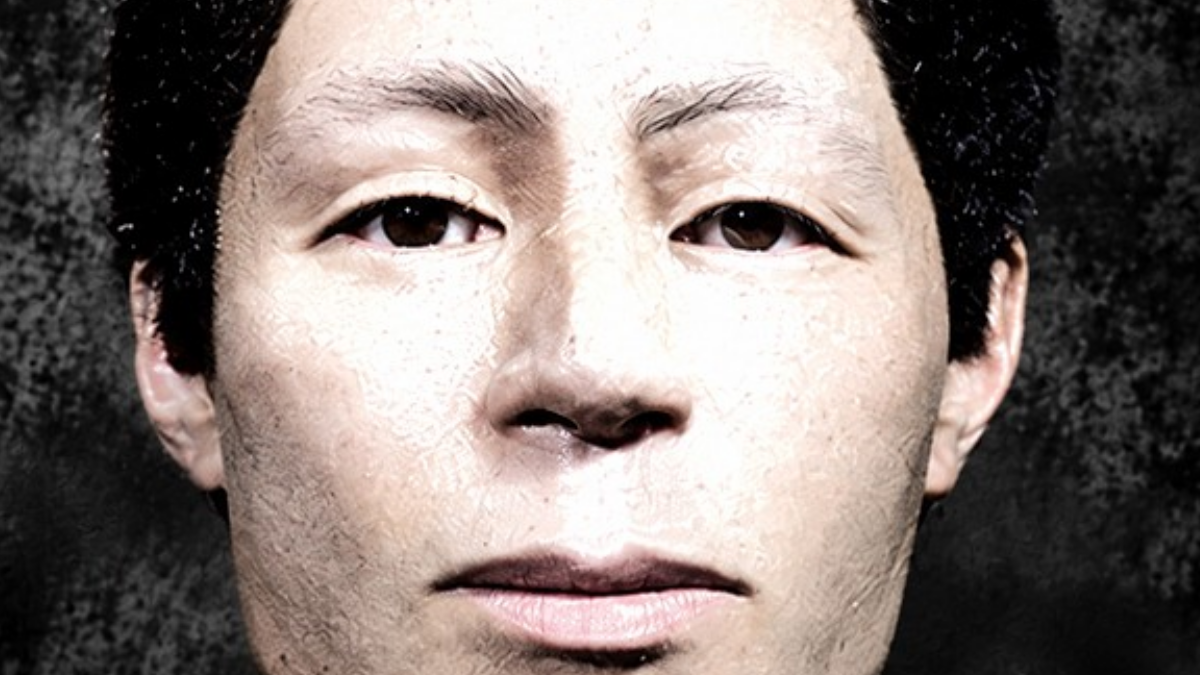
Investigators chased 250 missing person files, 800 dentists, and three clay faces.

In April 1977, on an abandoned farm just west of Tofield, Alberta, a man’s body was found at the bottom of an old septic tank. Nobody could say who he was, and as the weeks passed, it began to look as though nobody ever would. Whoever put him there had chosen a farm that had sat empty for two years, and a tank no one had any reason to open again.
It would be 44 years before anyone could put a name to him. For all of that time, the only thing the world really knew about him was where he had ended up.
It started with a pump. Farmer Charlie McCloud was building a new house on his property outside Tofield, a small farming town about an hour southeast of Edmonton, and the house needed a septic system. He could have driven into town and bought a pump for a few dollars, but he knew where a perfectly good one was already sitting in the ground.
About a mile from where he and his wife, Mavis, lived stood an old farmhouse the couple also owned. Nobody had lived in it or touched it in roughly two years. Out back was a septic tank, and the pump inside it still worked fine.
On April 13, 1977, a warm spring day, Charlie and Mavis drove out to fetch it. Charlie got as far as pulling the cover off the tank, which was about six feet deep and still held some murky water. Mavis would remember what she saw first: a gray wool sock, then a brown shoe bobbing in the water. The shoe, she realized, was attached to a leg.
The couple did not hesitate. By Mavis’s later account, they went to the police “real fast” because they knew something was badly wrong. They drove straight to the RCMP detachment in Tofield and told the officers that someone was down in their septic tank, headfirst.
Cpl. Ed Lamberts, who ran the detachment, grabbed another officer and followed the McClouds back to the farm. The two Mounties found an empty ice cream pail and went to work. For about an hour they stood over the tank, scooping the liquid out one pailful at a time, until enough was gone that they could see what lay below.
It was a body, and it was in bad shape. It had been rolled in a yellow bedsheet, the sheet tied with nylon rope, and the whole bundle dropped into the tank headfirst. Someone had then dumped a large quantity of lime on top, apparently hoping it would eat the remains away.
It had not worked as planned. Lamberts would later say the killers had done a thorough job, and that if the lime had finished the task, there might never have been a body to find. Getting the man out took six hours of careful work, with crime scene investigators backing up the two officers.
The remains were taken to the medical examiner’s office in Edmonton. Nobody at the scene could say for certain whether they had recovered a man or a woman. It took the medical examiner months to settle the question.
The answer, when it came, was a man, probably in his late 20s, with dark hair and a medium build. He wore blue jeans, a blue Levi’s work shirt with snap buttons, gray wool work socks, and a pair of imitation Wallabee shoes.
What the pathologists found next was far worse. Before he died, the man had been tied up and beaten. Someone had used a small butane torch and cigarettes on him, and the burn marks were still visible on what remained of his clothing. He had been cut with something sharp, and then, at the end, shot at least twice, in the head and in the chest.
Two bones bore bullet damage. Pathologists could not rule out additional shots, because a bullet that never strikes bone leaves nothing behind on a skeleton.
Lamberts did not know who the man was, but he had a firm impression of the people responsible. He called them cruel and vindictive. In May of that year he told the Edmonton Journal it was one of the most bizarre, disgusting and baffling murder cases he had ever worked.
He also believed the killers knew the area. In his view, whoever did this had to know the old farm was empty and that a septic tank sat behind it. To them it would have seemed a safe bet that no one would ever look inside again. Had Charlie McCloud not gone looking for that pump, they would have been right.
Nothing at the farm suggested the man had been killed there. The tank was only where he had been dumped. Wherever the crime actually happened, police had no idea.
Then came a second problem. Pathologists believed the body had been in the tank at least three or four months, and possibly as long as a year. That meant the man had been gone for months before the McClouds found him, and in all that time, no one had come forward to look for him.
Detectives worked from a grim assumption: he probably had no close family or friends nearby. Their leading idea was that he was a transient or a migrant worker, just passing through, and so nobody had missed him.
Back in Tofield, a town of about 1,200, the details spread, and fear spread with them. Neighboring farmer Johnny Wood went out and checked every septic tank on his own land, relieved to find nothing. The owner of the Diamond Restaurant wondered whether the killers might be among his regular customers. The manager of the Co-op store worried about the people who shopped there every day.
More than a month after the discovery, the local paper, the Tofield Mercury, ran a full page on the case under the headline “Grizzly Murder Case Has RCMP Baffled.” Mavis would remember that for years her family lived in fear. They were, she said, like a bunch of zombies.
Everyone had a theory. Some said a drug deal gone wrong, or a bad debt. Others pointed to a biker gang disposing of one of its own, or a husband who caught the man with his wife. It was all talk, and none of it went anywhere, because no one could say who the victim was.
So investigators turned to the one thing they could still do: try to learn his name. They went through at least 250 missing-person files, and none matched the man in the tank.
In June 1977, two months after the discovery, they mailed X-rays of his teeth to all 800 dentists in Alberta. He still had every tooth. Some were filled, and some of the work was fairly recent, which meant someone, somewhere, had been looking after them. Notices also went into dental bulletins and magazines across Canada in case he had come from another province. Not one dentist recognized him.
The examination did yield one more detail. Something in his bones and teeth showed he had been seriously ill around age 5. There was no way to know what the illness was, and the clue led nowhere.
Week after week, the Tofield Mercury ran the RCMP’s plea for information about any man who had gone missing in the area. Eventually the story slipped out of the paper. The man from the septic tank was buried in an unmarked grave in an Edmonton cemetery, with no one there to mourn him.
Almost a year after the discovery, the file landed on the desk of Cpl. Jamie Graham in Edmonton. Its title said it all: “unidentified human remains,” followed by a file number. Graham kept urging local reporters to run the story again, and each time, new tips came in and were chased down.
A few times the publicity drew out people who claimed to have done it. Investigators saw through each of them quickly. Graham was candid that the odds of solving the case were not good, but he said he did not want whoever did it to ever relax.
Then, in early 1979, a Calgary police officer called Graham about something he had read in a police gazette. Two forensic specialists in the United States could take a skull and rebuild a likeness of the face. One was Dr. Clyde Snow, a forensic anthropologist in Oklahoma, who had worked since 1967 with medical illustrator Betty Pat Gatliff. Together they had handled more than 60 skulls, most of them cases police had given up on.
Just three years earlier, Snow had determined that a dummy hanging in a California funhouse was actually the mummified body of a real man. He told Graham to bring him the skull and the rest of the bones.
So the man from the septic tank was exhumed. His remains were packed in a box, and Graham boarded a commercial flight to Oklahoma with that box on his lap.
At the University of Oklahoma, Snow took about 50 measurements of the skull and another 75 from the rest of the skeleton, then ran them through a computer program. He came away with two conclusions and was not shy about either. “I’m damn sure he’s a native,” he told Graham, and he reckoned the man was 35.
That was a very different picture from the one the RCMP had been working with. For the official record, Snow was more careful, listing a man between 26 and 40, most likely Indigenous but possibly Caucasian. From the bones of the hands and fingers, he could also say the man was right-handed.
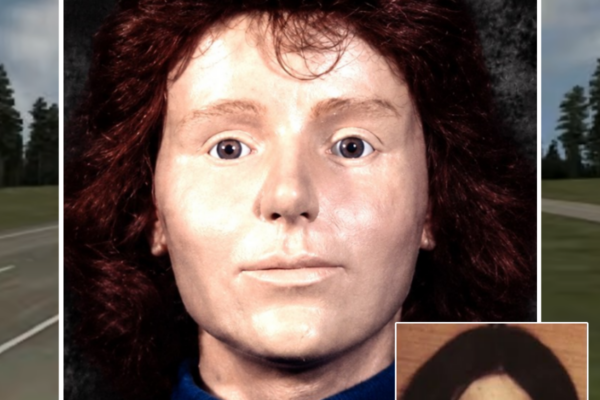
Gatliff then went to work on the face. She covered the skull with small guide pins and built up modeling clay one layer at a time. She added glass eyes, then eyebrows, eyelashes and hair.
For the first time since the McClouds lifted that cover, investigators had a face to look at. Graham had it photographed and carried the pictures back to Edmonton. By then the homicide unit had given the victim a nickname, and when the photos of the clay face went out to newspapers across Canada, the nickname went with them. They called him Septic Tank Sam.
The face brought a new wave of calls from people who believed they recognized an old friend or a missing relative. Investigators spent months checking every one. None panned out.
By 1983, six years in, the RCMP released details they had been holding back, hoping something might jog a memory. They described the yellow bedsheet and the nylon rope. They said the man had most likely been tied to a bed while he was tortured, because the burn marks on his shirt sleeves stopped just short of his wrists.
One sock showed that the sole of his foot had been burned. Police said it looked as though someone had cut the crotch out of his jeans with heavy farm shears. They also said he might have been in the tank for a full year, which meant he could have been killed as early as April 1976. None of it brought them closer to a name.
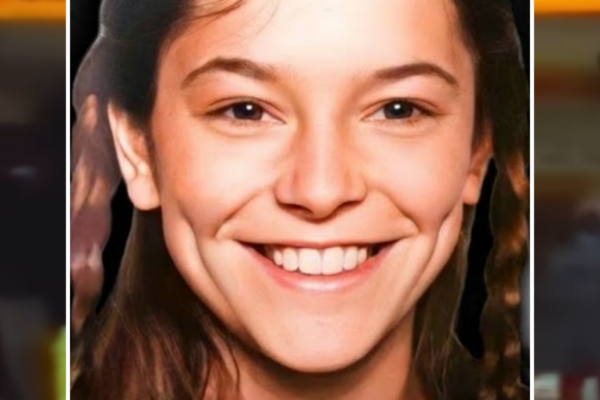
In 1995, nearly 20 years after the discovery, the medical examiner’s office in Edmonton acquired a new computer program for building a face from a skull. Working with a university anthropologist, they released Sam’s second face that January. The computer produced three versions: clean-shaven, with a mustache, and with a full beard.
At least a dozen new leads came in, from as far away as California and New Brunswick. A California woman called after a relative in Manitoba saw the pictures, because her brother had vanished from Vancouver around that time. A caller in New Brunswick spoke of a brother who had disappeared while traveling out west. Dental records ruled out both men, and every lead after them.
In 2000, Cyril Chan, a forensic artist with the medical examiner’s office, had Sam exhumed for the second time. He spent three weeks studying the skull, then built a new clay face over it. This time he left the mouth slightly open to show the teeth and used wooden eyes instead of glass.
For a stretch, it looked as though a breakthrough might be near. One family contacted investigators after seeing Chan’s reconstruction, saying the face resembled a missing relative. The details they offered fit what was known about Sam, and the constable on the case told reporters it was the closest profile police had ever had.
In 2001, the Edmonton Sun ran the story under the headline “Police Closing In on Septic Tank Sam’s ID.” Investigators now held something their predecessors never had: a DNA profile from Sam’s remains. They collected samples from the family’s immediate members, and even from uncles, aunts and cousins.
The comparisons took several weeks. When they were done, the DNA ruled him out.
In April 2007, near the 30th anniversary, a Globe and Mail reporter visited Tofield. Lamberts had retired from the RCMP in 1990 and was selling real estate in town. He estimated the case had cost at least a million dollars, and he did not expect it ever to be solved.
His own boss at the time of the murder had gone to the grave still hoping to see it closed. Time, Lamberts said, was working against them. If police could only learn the victim’s name, he believed, they might be able to work out the rest.
By then the file filled two large green filing cabinets in the basement of the Tofield detachment. Police there still suspected that Sam was a transient and not from Alberta. Mavis McCloud was 73, and over the years she had received some strange calls about the case. The strangest came from a man in Britain who wondered whether Sam might have been a cowboy, and perhaps a long-lost relative.
She told reporters she had thought about it less and less as the years went on. But there was one thing she wanted people to understand about the man she had found. “This guy belonged to someone,” she said.
In October 2017, Staff Sgt. Jay Zazulak of the Alberta RCMP’s Historical Homicide Unit told the Edmonton Journal about a coming national DNA database. Families of missing people would be able to submit samples, to be checked against unidentified remains across the country. It was exciting, he said, but he admitted the odds of it cracking Sam’s case were slim.
Lamberts, then 76, did not think it would help either. He said the only real hope left was that the killer might confess to a priest, or to someone else, shortly before dying.
Then, in April 2018, California police arrested a man they called the Golden State Killer. The way they found him gave investigators a new method for naming the unknown. They had taken DNA from old crime scenes, run it through a public genealogy website, and built out family trees until they reached him. The Alberta RCMP began looking at Sam’s case with that approach in mind.
In 2019, they ran Sam’s DNA through the new national databases. The profile, only a partial one developed in 2012, matched no one. So in 2020, the Alberta RCMP’s missing persons unit and the provincial medical examiner sent samples from Sam’s remains to Othram, a private DNA lab in The Woodlands, Texas.
The material was in rough shape after months in a septic tank and more than 40 years in the ground. Othram CEO David Mittelman would later say it was very degraded and full of bacteria, with only a small part of it human. It was enough.
Othram’s scientists built a full genetic profile, and the lab’s genealogist compared it with people who had uploaded their DNA to public ancestry databases. One of those people turned out to be related to Sam. They had agreed to let their profile be matched against others, and that was all it took to begin.
From that match, the genealogist constructed a family tree, and the RCMP had a short list of possible close relatives. One was a woman who had lost track of both her brothers over the years. Investigators collected DNA from the family and sent it off for confirmation.
By January 2021, the RCMP had their answer: the family relationship was real. On June 30, 2021, 44 years after Charlie McCloud pulled the cover off that tank, the Alberta RCMP held an online news conference and told the public who Septic Tank Sam really was.
His name was Gordon Edwin Sanderson. His family and friends called him Gordie. Born in Manitoba in October 1950, he was only 25 or 26 when he was killed. He was an Indigenous man, exactly what Clyde Snow had told Jamie Graham back in 1979.
That fact carries its own sting. The day before Gordie’s name was released, the CBC checked the RCMP’s own listing for the case and found him described as Caucasian. Snow’s board had allowed for that possibility, but his stated belief had been that the man was Indigenous.
Gordie’s life had been hard from the start. At age 9, he was taken from his family during what is now called the Sixties Scoop, when thousands of Indigenous children in Canada were removed from their homes by child welfare authorities and placed in care. He grew up in foster care. The RCMP said that as an adult he struggled with addiction and had some run-ins with police.
By the 1970s he was living in Edmonton, about an hour’s drive from that farm. He had a daughter. The last his family heard, he was heading to Calgary to meet his younger brother, Arthur. As far as they know, he never arrived.
Here the accounts diverge. According to the RCMP, Gordie’s older sister, Joyce, reported him missing in the early 1980s and never heard anything back. The RCMP also said it could not confirm where that report was made, or whether one was ever written up or received at all. The family’s recollection and the police record, in other words, do not line up, and neither side has produced anything to settle it.
Whatever happened to that report, the man nobody had come forward to look for was the brother Joyce Sanderson had reported missing. She had lost touch with Arthur over the years, too. In the course of the investigation, the RCMP were able to tell her that Arthur had died in Edmonton several years earlier. She received news of both her brothers at once, and a memorial was planned for the two of them together.
Zazulak said the news was a great deal for Joyce and the rest of the family, including Gordie’s daughter, to absorb. That morning, he said, there was mourning, and there was relief. There was also some anger about what Gordie went through in life and what was done to him.
At Othram, Mittelman said seeing Gordie’s photo hit him hard, because Gordie was a young man whose life was cut short. He said he was glad the picture had been shared, as a reminder that these were real people and not just data points. It meant something to him that Gordie’s sister was still alive to finally get an answer.
With a name at last, the RCMP could begin asking who killed him. They offered a theory. Police told reporters they believed Gordie was killed by associates involved in various criminal acts in the Edmonton area. They named no one, and to this day, no one has been charged with his murder.
That theory sits uneasily beside the one held for decades in Tofield. Lamberts long argued that the killers must have known the farm and its tank, which pointed to a local. The police assumption that the victim was a transient from elsewhere has now been overturned: Gordie lived an hour away.
Whether the killers were Edmonton associates, as the RCMP now suggest, or people with ties to the Tofield area, as the McClouds’ daughter has long believed, remains unresolved.
Zazulak said it is very possible the killers have already died, given how much time has passed and the kinds of lives some of Gordie’s associates were living. Lamberts, by then in his 80s, agreed. He told the CBC that if the killer was still alive, he could not see how that person would ever be punished. He did not know, he said, what anyone was supposed to do with an elderly man over something done nearly 50 years earlier.
Charlie and Mavis McCloud both died before Gordie got his name back. Their son Greg was 15 when his parents found the body. He told the CBC he never knew the details until that week, because his father never talked about it.
Their daughter said the same. Their parents’ memories of the discovery were bad ones, so they did not bring it up. She said she had always believed the killer was a local, since he would have had to know the tank was there.
The tank itself is gone. By 2007 it had been built over, and the spot where the McClouds found Gordie had become part of a subdivision. At the Tofield RCMP detachment, the file opened on April 13, 1977, is still open.
By the RCMP’s own account, the real homicide investigation began only on the day they identified Gordie. After 44 years, the hunt for the person who killed him is, in their words, still in its early stages.
Disclaimer: This article is based on public reports and statements from police and other sources, no one has been convicted in this case, and all individuals mentioned should be presumed innocent of any wrongdoing unless proven otherwise in court.